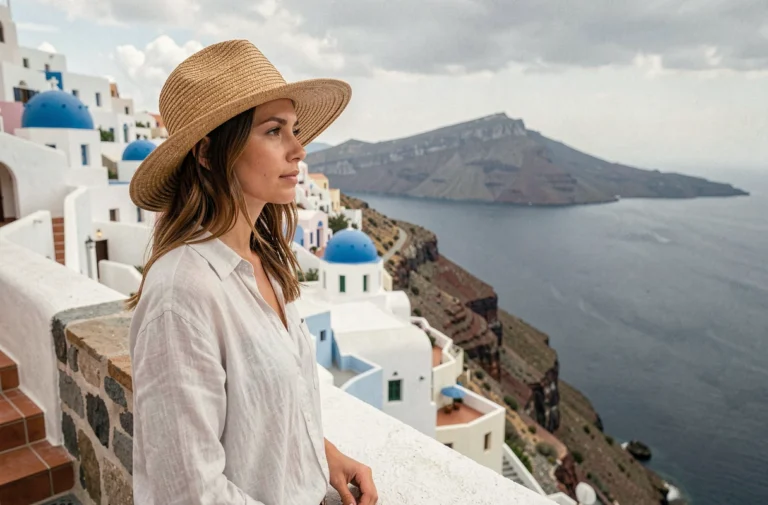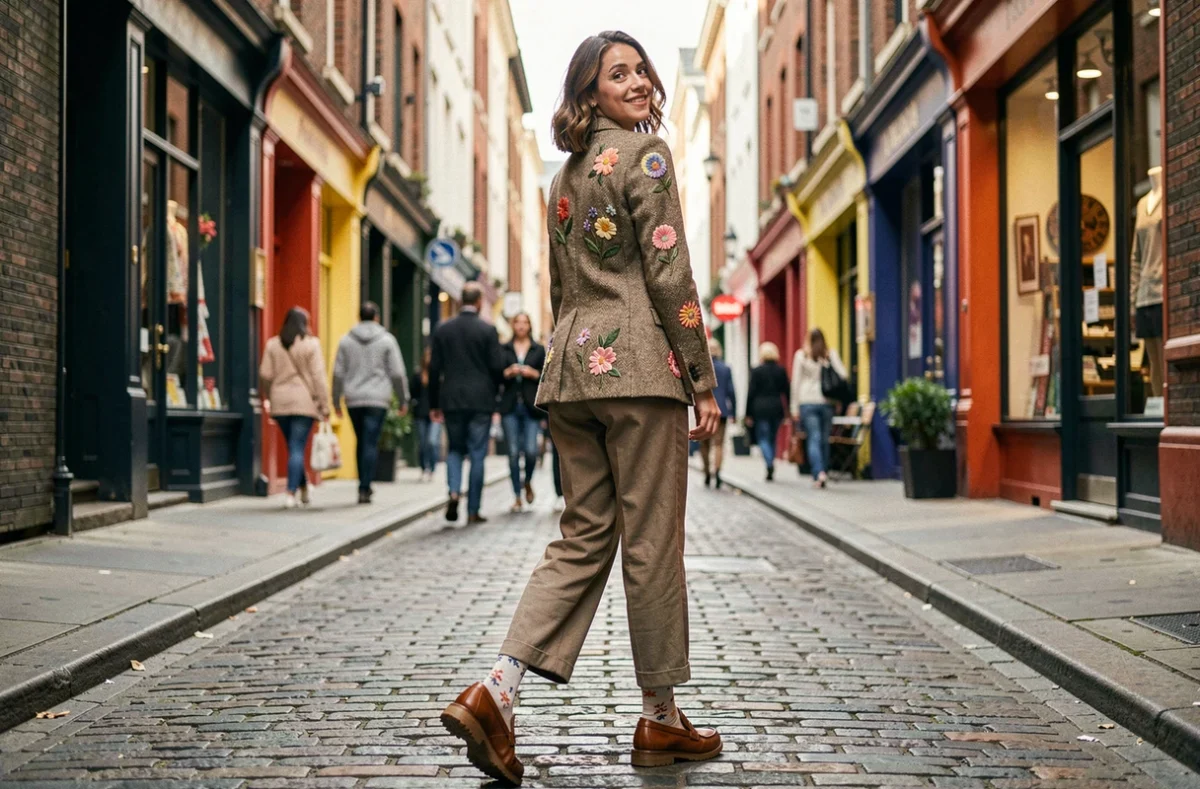
Everyday creativity isn’t achieved by piling on fashionable pieces. It takes shape through clothing and decor choices that reflect a personal interpretation of style codes, rather than slavishly reproducing them.
Reworking textiles and expressing individuality: create a style without following fashion trends
Trends are codes to reinterpret, not templates to copy. Wearing a seasonal piece exactly as it appears in the suggested shop-window outfit does little more than signal a purchase. Creativity begins when you take a piece out of its original context and pair it with something unexpected.
We find that secondhand shopping offers a practical way to create a distinctive style. La Fevad notes that secondhand websites account for a significant share of online fashion sales. This channel gives you access to pieces with a story, cuts that brands have discontinued, and prints you can no longer find in stores. A structured 1990s blazer worn over a contemporary graphic T-shirt creates a contrast that fast fashion cannot replicate.
The technical challenge is getting the materials to work together. Pairing corduroy with fine jersey works because the textures contrast without canceling each other out. Pairing two shiny synthetics has the opposite effect: visual overload with no focal point. On lafantaisie.net, this approach to styling through textile contrast is explored with practical combinations that break away from the usual.
Three ways to rework a basic piece
- Reverse the proportions: wear wide-leg trousers with a fitted top (or vice versa) to shift the expected silhouette and create a focal point without adding an accessory.
- Mix and match with intention: choose socks, a belt, or a collar in a different color palette from the rest of your outfit, but in a complementary shade.
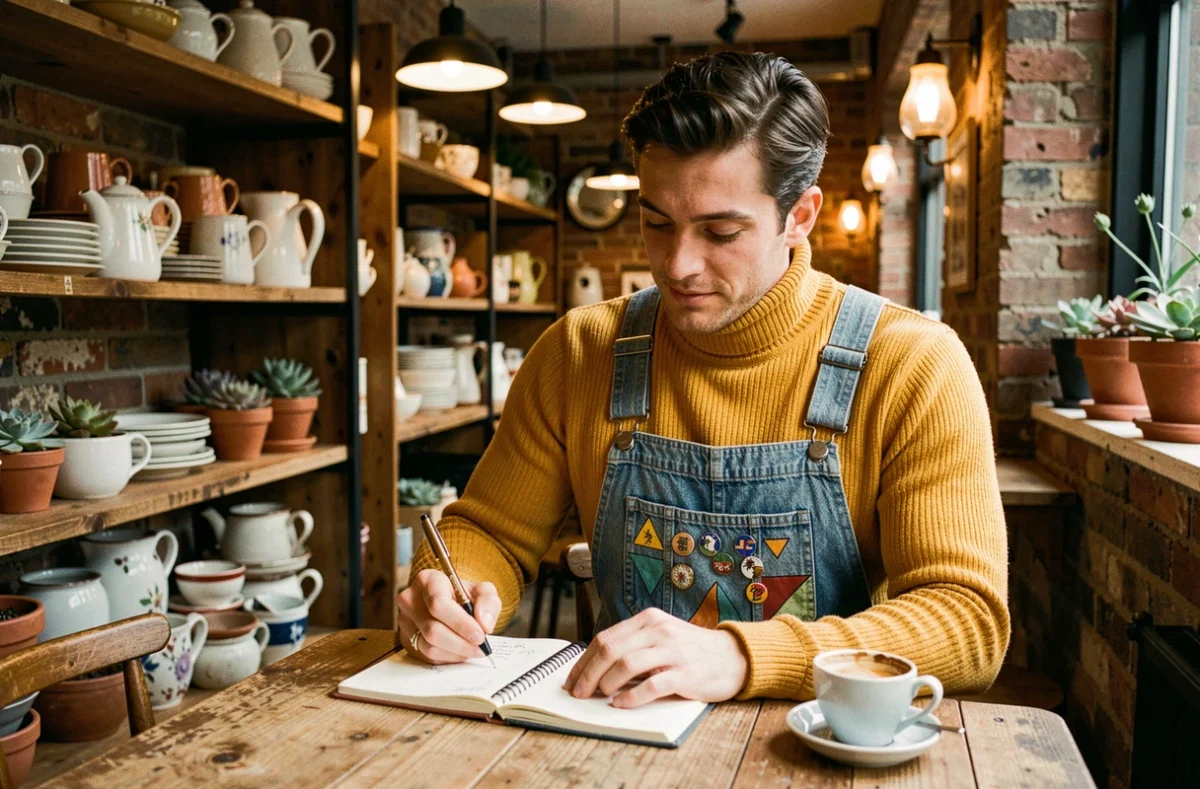
- Change the context: workwear (a blue work jacket, leather apron, or construction jacket) incorporated into a casual urban outfit creates an immediately recognizable contrast.
Textile environmental labeling: what responsible creativity still leaves unsaid
Textile eco-scores are still hard to find in stores and rarely understood by consumers. According to UFC-Que Choisir, one year after the voluntary environmental cost label for clothing was introduced, brands are still making little use of it. This matters to anyone who wants to express their personality while making informed choices.
In practice, France’s environmental labeling scheme is voluntary, but subject to rules whenever a brand communicates the impact of a garment. This means consumers looking for original, responsibly made pieces cannot rely on labels alone. They need to consider the fabric composition (shown on the legally required composition label), the country of manufacture, and the type of fiber.
This gap between intentions and available information makes secondhand shopping all the more relevant. Buying a garment that already exists sidesteps the question of environmental labeling, since its production impact has already been incurred. Here, creativity goes hand in hand with material restraint without sacrificing originality.
Clothing creativity and psychology: why what you wear affects how you see yourself
What you wear can change your behavior. This phenomenon, documented in psychology under the term enclothed cognition, shows that the symbolic attributes of clothing influence the wearer’s cognitive processes—not just how others see them.
Wearing a piece seen as unconventional (a bright color, an unusual cut, or an offbeat pattern) has a twofold effect. First, it signals intention: the wearer has made an active choice, not a default one. Second, it changes their social presence: someone who confidently wears something unusual makes a form of nonverbal statement that can boost their confidence in social interactions.
Practical ways to add a touch of creativity without overdoing it
Creativity doesn’t require an entirely eccentric wardrobe. A single element is enough to change the way an outfit is perceived.
- Visible patterned socks (worn with cropped or rolled-up trousers) are the easiest place to start: low cost, no risk, and an immediate visual impact.
- A head accessory (beret, headband, or tied scarf) changes your silhouette without altering the structure of your main garment.
- Mixing prints works when the patterns share at least one color. Fine stripes and florals in the same color palette create a cohesive look.
- A handmade or vintage piece of jewelry worn on its own draws more attention than a pile of mass-produced costume jewelry.
Fashion and personality: build a lasting visual signature
A visual signature isn’t based on a logo or brand. It comes from repeating a recognizable style choice. Some people are known for their color palette, others for a particular collar shape, a style of glasses frame, or the way they tie a scarf.
Repeating a distinctive detail builds recognition faster than constantly changing your look. Changing your style every day dilutes your visual identity. Settling on two or three defining features (a dominant color, a go-to accessory, or a preferred material) gives your personality a lasting presence.
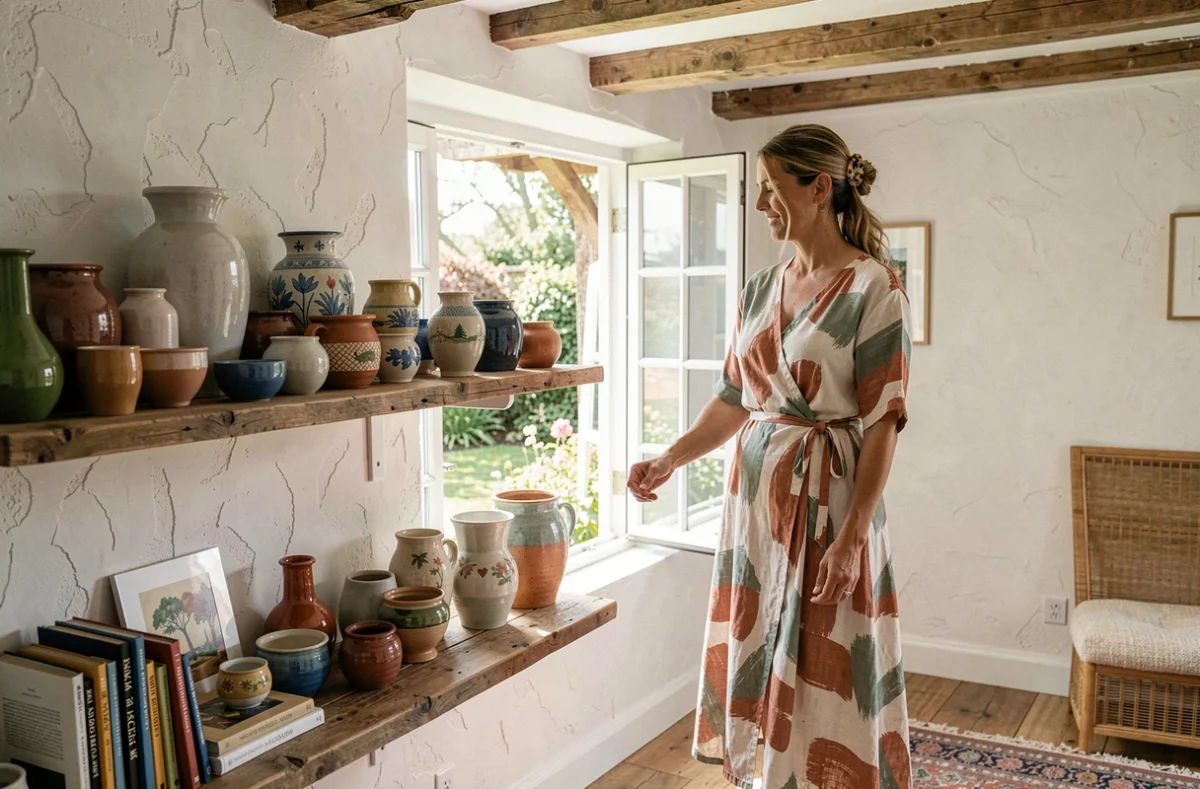
The same principle applies to your living space. An interior where every decorative object tells the story of a trip or a deliberate choice creates a sense of cohesion that catalog-style decor cannot match. Everyday creativity, in clothing as in the home, comes from patiently building on choices you stand by—not from dramatic changes.
The clothes you’ll wear tomorrow morning are already in your closet. The question isn’t what to buy, but how to look at what you own differently and decide what message you want to send.