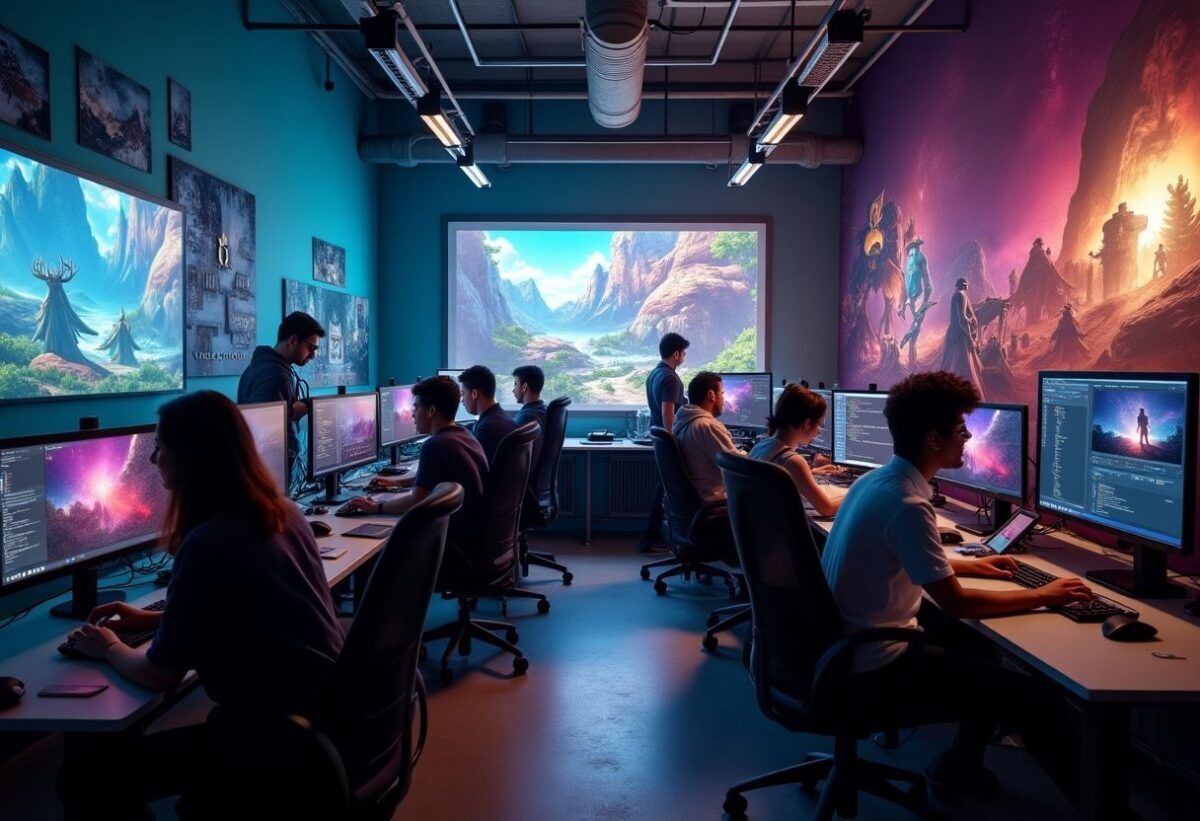
The creation of video games has become a thriving industry, attracting millions of players around the world and generating billions in revenue. In light of this enthusiasm, the need for qualified professionals to design, develop, and produce these games has never been greater. Video game training programs have therefore multiplied, offering enthusiasts the opportunity to turn their interest into a promising career.
These programs, although diverse, all share a common goal: to immerse students in an environment that combines cutting-edge technology, overflowing creativity, and business strategy.
In this context, it is essential to explore the different facets of video game training, as well as the opportunities they offer to aspiring developers, designers, and digital artists.
The Various Specialties of Video Game Training
Video game training is far from limited to learning simple software development. It encompasses a range of specialties, each playing a crucial role in creating a captivating and successful final product.
One of the flagship specialties is game design, which focuses on designing game mechanics, balancing challenge and reward, and the overall player experience. Game designers are often seen as the soul of the game, as they determine how the player interacts with the virtual universe.
Next, computer development is essential. It involves programming video games using suitable programming languages like C++, Java, or Unity. Developers translate creative concepts into digital realities.
At the same time, animation and graphics play a vital role. These specialties focus on creating the game’s aesthetics, whether through 3D modeling, character animation, or designing virtual environments.
Finally, sound design and music are elements that enrich the immersive experience of the player. Audio specialists design the soundscapes and original scores that accompany the player throughout their quest.
The Benefits of Video Game Training in Specialized Schools
Many specialized schools in video game training have emerged to meet the growing demand for qualified professionals. These institutions provide a structured environment and dedicated resources to train the next generation of game creators.
- Professional Guidance: These schools employ instructors who have significant experience in the video game industry. Their advice and expertise are invaluable to students.
- Access to Cutting-Edge Technologies: Specialized institutions invest in state-of-the-art equipment and software, ensuring that students are trained with the tools they will encounter in the professional world.
- Networking and Internships: Schools often maintain partnerships with video game companies, facilitating access to internships and career opportunities for graduates.
- Hands-On Projects: Students frequently work on real projects, often in teams, allowing them to gain practical experience and build their portfolios.
The Challenges and Opportunities in the Video Game Industry
The video game industry, while offering numerous opportunities, also presents several challenges that aspiring professionals must face.
Firstly, the competition is fierce. With an industry that attracts more and more talent, standing out becomes a constant challenge. It is essential for students to cultivate a unique identity and hone their skills.
Secondly, the technological pace is relentless. Technologies are constantly evolving, and professionals must quickly adapt to new trends, tools, and methodologies. This requires a willingness for continuous learning and great flexibility.
Despite these challenges, the sector offers incredible opportunities. Video games are no longer limited to entertainment. They find applications in fields such as education, health, and simulation, thereby broadening the professional horizons of developers and designers.
The Career and Impact of Video Game Training
Careers stemming from video game training are diverse and can lead to exciting and influential roles in the industry.
Among these careers, we find roles such as product manager, who oversees the overall development of a game, screenwriter, who designs the story and dialogues, and digital artist, who creates the visuals of the game.
- As a game designer, a professional can directly influence the player’s experience and contribute to memorable creations.
- Game developers, on the other hand, translate concepts into tangible reality, playing a central role in the technical realization of games.
- Animators and graphic designers, with their creativity, shape the game’s aesthetics, while sound specialists add the finishing touch that completes the immersion.
Video game training programs are therefore much more than a springboard to a professional career; they represent a true opportunity for passionate individuals to leave their mark on a dynamic and ever-evolving sector.