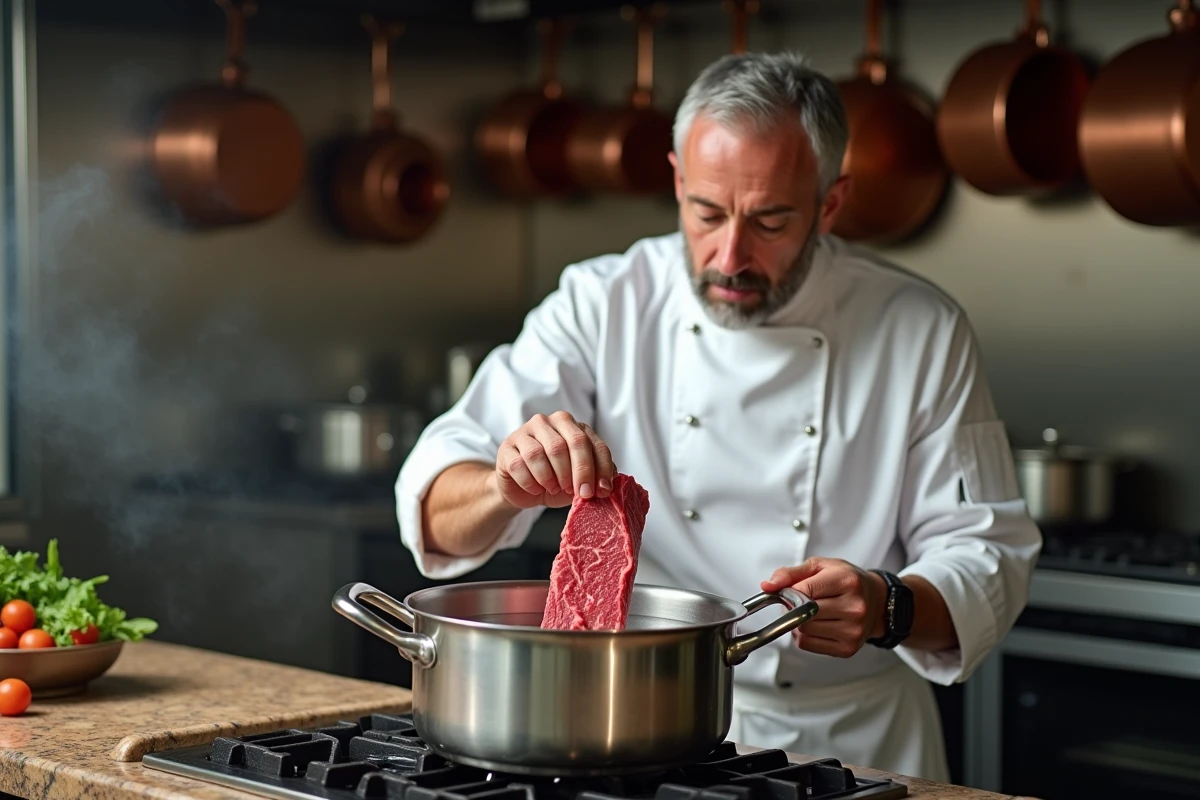
Blanching beef involves briefly immersing it in boiling water, then rinsing it before starting the main cooking process. This technique alters the texture of the meat, the flavor of the broth, and even the food safety of the final dish. Precisely measuring what blanching removes (or preserves) from a piece of beef helps determine if the step is worth the time it takes.
Blanching beef and direct cooking: what each method removes or preserves
Comparing the two approaches across several criteria helps visualize the actual difference between blanched beef and beef cooked directly.
| Criterion | Blanched beef before cooking | Beef cooked directly |
|---|---|---|
| Visible impurities (scum) | Removed during the first bath, clear broth | Abundant scum to be skimmed manually during cooking |
| Flavor of the broth | Cleaner, clarified base flavor | More complex but sometimes cloudy, with bitter notes |
| Texture of the meat | Firm surface, tender interior after simmering | Softer surface, less homogeneous final texture |
| Aromatic profile of strong cuts (tongue, offal) | Softened flavor, reduced bitterness | Strong taste, sometimes deemed too powerful |
| Risk of cross-contamination (offal, risky cuts) | Reduced by partial removal of surface flora | Depends solely on the temperature reached during cooking |
| Total preparation time | Few extra minutes | Extended skimming time at the beginning of simmering |
The table shows that blanching is not just an aesthetic gesture. The most significant difference concerns the clarity of the broth and the reduction of undesirable flavors, two factors that directly influence the perceived quality of the finished dish.
Understanding why to blanch beef means accepting that a stew is largely determined before the heat is turned to long cooking.
Scum, impurities, and food safety: what blanching really eliminates
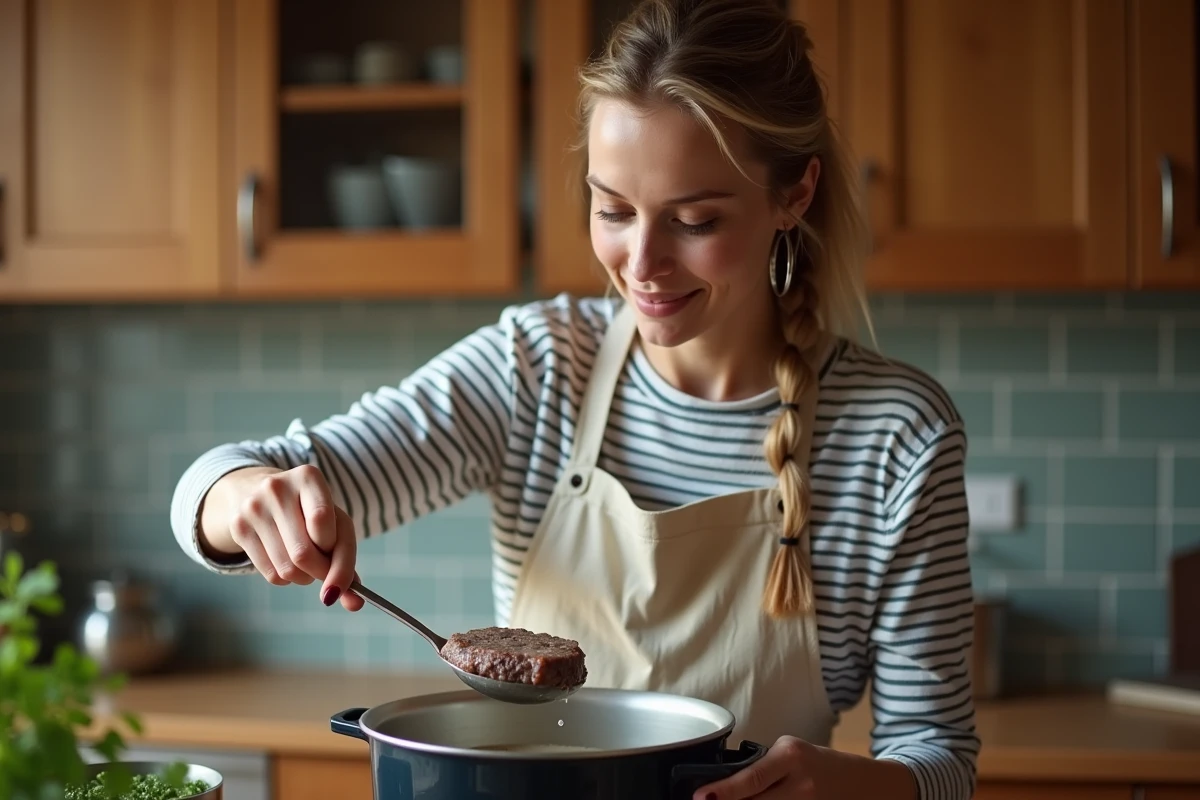
The scum that forms on the surface of boiling water is a mixture of coagulated soluble proteins, residual blood, and fats released by heat. By discarding this water and rinsing the pieces, most of these elements are removed before they can disperse into the cooking broth.
Professional resources in butchery and charcuterie remind us that blanching certain offal (tripe, kidneys, liver) serves to limit the risks of cross-contamination with other products. This role as a sanitary barrier is seldom mentioned in mainstream content focused on classic stews.
Strong-flavored beef cuts
Beef tongue illustrates well the aromatic function of blanching. Specialized recipes consider this step essential to soften the strong flavor before any prolonged cooking. Without blanching, the tongue retains a bitterness that slow cooking does not suffice to erase.
The same principle applies to gelatinous cuts from the foot or fatty trimmings used in certain stocks. In contrast, a lean cut like the round has less scum, and blanching mainly serves to clarify the broth.
Beef blanching technique: temperature, duration, and common mistakes
Blanching relies on a simple protocol, but a few common mistakes reduce its effectiveness or degrade the texture of the meat.
- Starting cold or hot: placing the pieces in cold water and then bringing it to a boil allows for a gradual extraction of impurities. Starting in boiling water seizes the surface too quickly and traps some blood inside.
- Duration of blanching: a few minutes after boiling is sufficient for most cuts. Extending beyond that dries out the outer layer of the meat and begins to cook the piece, which harms the result of the subsequent simmering.
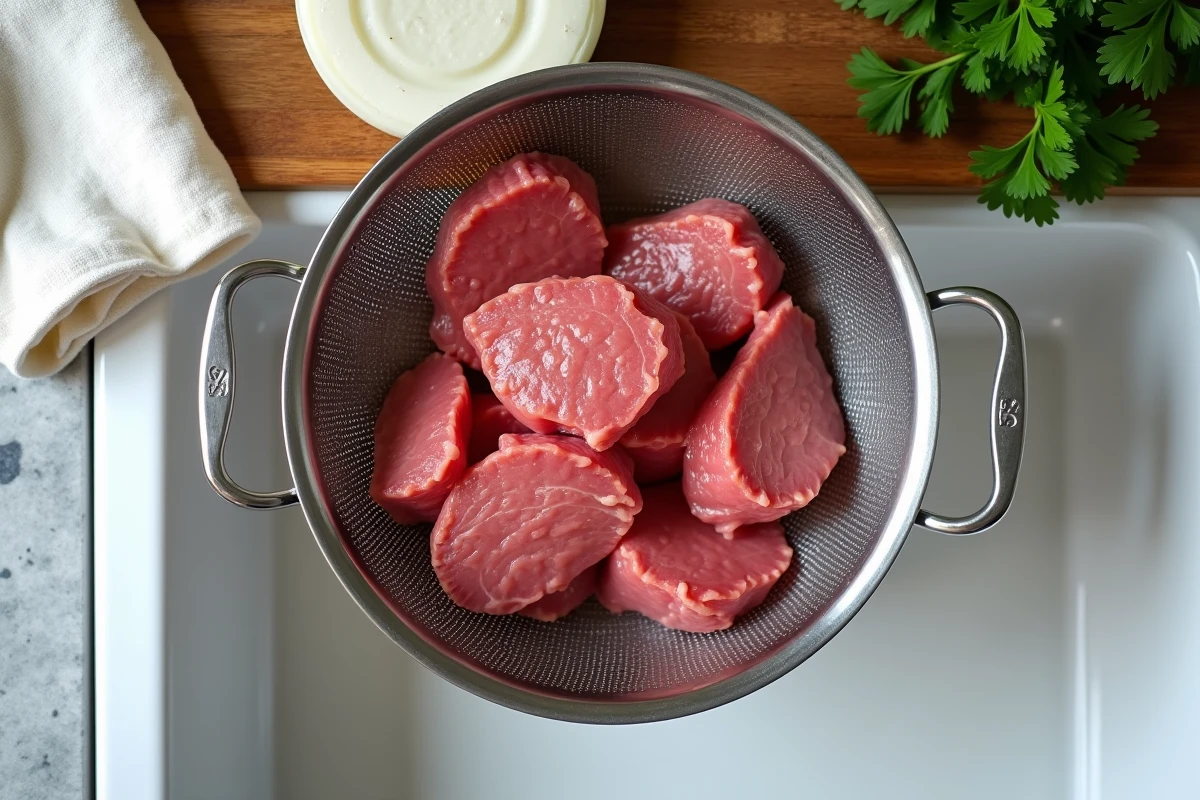
- Rinsing after blanching: rinsing the meat under cold water removes scum residues stuck to the surface. Skipping this step means reintroducing some impurities back into the cooking pot.
A cold start followed by careful rinsing yields a significantly clearer broth than a hot start without rinsing. The difference is visible to the naked eye in the pot.
When blanching makes a difference for beef broth
A classic brown stock, where bones and trimmings are first browned, does not require blanching: the Maillard reaction on dry surfaces plays a different role. In contrast, a white stock or a blanquette, where the meat cooks in a clear liquid, directly benefits from blanching. The clarity of the broth is the first indicator of success for these preparations.
Blanching beef in professional culinary references
Blanching meats and offal is included in training modules in gastronomy and food craftsmanship, particularly at the level of the basics of stocks and sauces. It is not a domestic trick passed down by habit: it is a codified technical gesture, taught to apprentice cooks as a prerequisite for making clear stocks.
This formalization explains why blanching remains systematic in restaurants, even with vacuum-packed and refrigerated meats. The context of purchase (open market or refrigerated section) does not eliminate soluble proteins or residual blood. It reduces bacterial risk, but the impurities responsible for scum are present regardless of the cold chain.
Asian cuisines apply the same principle with comparable rigor: many recipes require blanching followed by rinsing before any braising or stewing. The gesture transcends culinary traditions because the problem it solves (coagulated proteins, bitter taste, cloudy broth) is universal.
Blanching a piece of beef takes just a few minutes and only costs a change of water. The resulting broth, cleaner and finer, justifies this detour for every preparation of stew or clear stock.