A faucet that’s hard to turn, a bathtub that’s become risky, a switch that’s too low: these small daily obstacles can weigh heavily when mobility decreases. Adapting one’s home with the right equipment for seniors allows for greater independence at home for much longer. However, one must know where to start, and especially what truly changes daily life.
MaPrimeAdapt’ and financing: what to check before purchasing any equipment
Many families order a shower seat or a stairlift, only to discover afterward that they could have benefited from financial assistance. With MaPrimeAdapt’, launched on January 1, 2024, the financing process has been centralized. The main trap is simple: the application must be submitted before the work begins. An installation done too early can jeopardize the funding.
The 25% tax credit for home adaptation, often mentioned in online guides, has been eliminated for expenses paid from January 1, 2026. Content that still presents it as available is outdated. However, a reduced VAT of 5.5% may still apply, under certain conditions, to the supply and installation of specific equipment in older homes.
Before ordering any equipment, it’s better to go through a personalized assessment. MaPrimeAdapt’ also provides support from an approved operator. An occupational therapist or the CCAS of your municipality can also evaluate real needs, room by room, to consult www.la-revue-des-seniors.com and identify solutions tailored to each situation.
Bathroom safety: equipment that truly reduces the risk of falling
The bathroom accounts for the majority of domestic accidents among the elderly. Wet floors, stepping over obstacles, and the lack of support points all combine to create daily dangers.
Grab bars and shower seats: the basic duo
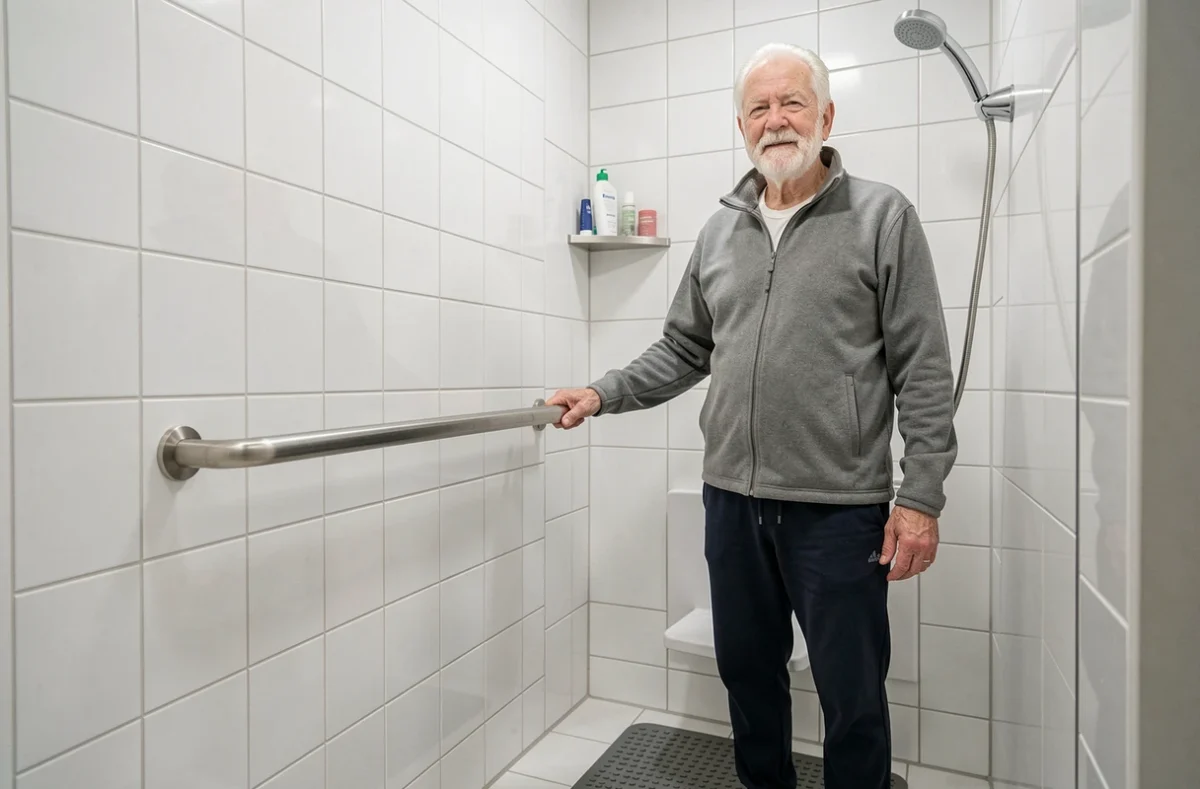
Wall-mounted grab bars are not a gimmick. Installed at the right height near the shower and toilet, they provide a stabilization point during transfers (getting up, sitting down, turning). A foldable wall-mounted shower seat or a non-slip chair complements this setup. These two combined pieces of equipment radically change daily safety.
Replacing the bathtub with a walk-in shower
Stepping over the edge of a bathtub becomes perilous when balance is compromised. A walk-in shower, with a flat shower tray and non-slip surface, eliminates this risk. This type of work falls under the scope of MaPrimeAdapt’, provided the order is followed: assessment, application for aid, then implementation.
Toilet riser
Getting up from a very low position puts a lot of strain on the knees and back. A toilet riser, with or without armrests, reduces the range of motion. Its cost remains modest, and it can be installed without any construction work.
Comfort and independence in living spaces: lift chair, lighting, and adjustable bed
The bathroom is not the only room that needs adaptation. The living room and bedroom deserve equal attention, as this is where seniors spend most of their day.
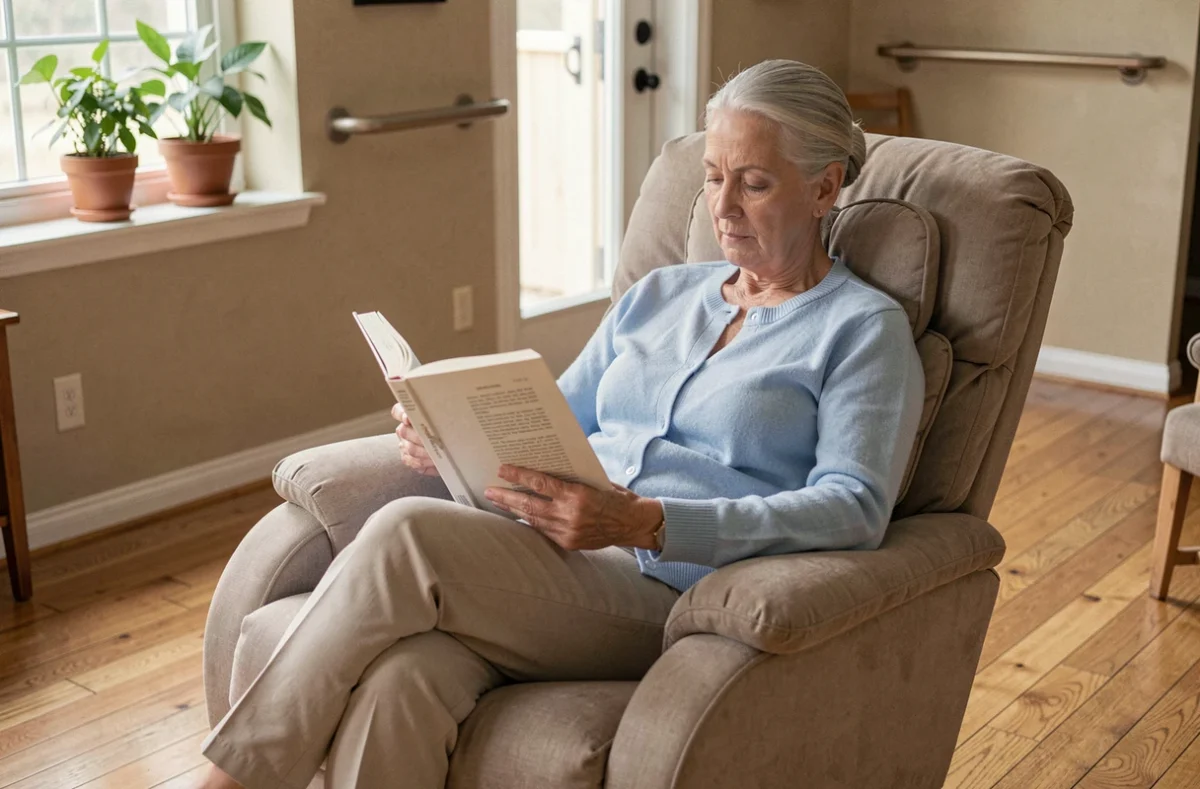
Electric lift chair: getting up effortlessly
Have you ever noticed an elderly person hesitating for a long time before getting up from a couch that’s too deep? The electric lift chair solves this problem. Its mechanism tilts the seat forward and assists the standing motion. The lift chair preserves independence where a traditional couch compromises it.
Here are a few selection criteria to keep in mind:
- The seat depth should match the user’s body type, not just the aesthetics of the model
- A removable and washable cover avoids long-term hygiene issues
- The remote control should be accessible even with reduced hand mobility (large buttons, visual contrast)
Medical bed or height-adjustable bed
A bed with electrically adjustable height makes getting in and out easier. For those who spend time in bed, a bed with adjustable head and foot sections improves respiratory comfort and blood circulation. An adapted bed reduces dependence on a caregiver for daily tasks.
Adapted lighting and motion detectors
A poorly lit hallway at night is enough to cause a fall. Motion-sensor night lights, placed between the bedroom and the bathroom, secure nighttime movements without needing to search for a switch. Dimmable bulbs also allow for adjusting brightness according to the time of day, reducing eye strain.
Home automation and teleassistance: when technology complements equipment
Physical equipment (bars, seats, chairs) forms the foundation of comfort at home. Home automation adds a layer of active safety.
- Motorized roller shutters eliminate a physically demanding action, especially for high or hard-to-reach windows
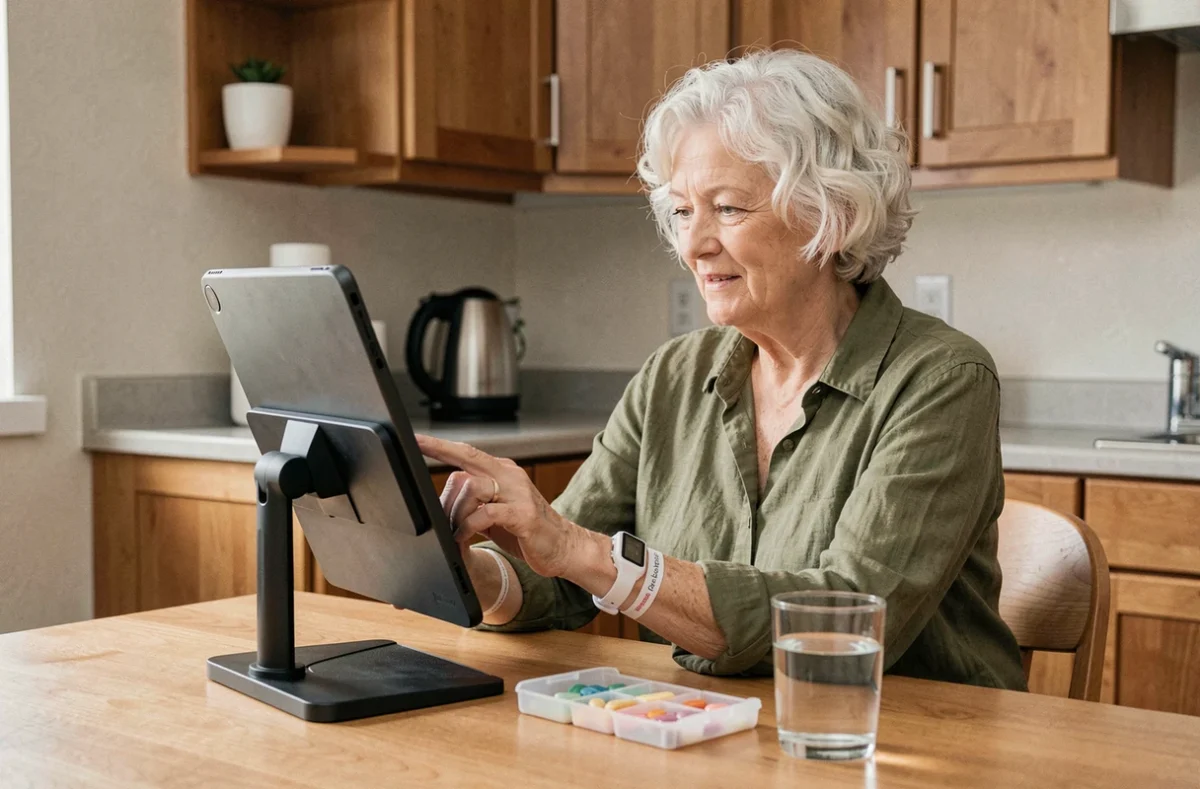
- A teleassistance bracelet or pendant allows for triggering an alert in case of a fall, even when alone at home
- Connected smoke detectors send a notification to a relative or monitoring center if the person does not respond to the alarm
- Programmable thermostats maintain a stable temperature without daily adjustments, preventing both hypothermia and unexpected bills
The value of these devices lies not in their technical sophistication, but in their ability to compensate for a vigilance that may decline with age. A teleassistance bracelet is nothing spectacular, but it can make the difference between a fall addressed within minutes and immobilization for several hours.
The best equipment is the one that the person agrees to use every day. A stairlift imposed without consultation often ends up unused. Involving the senior in the choice of equipment, allowing them to test it, respecting their habits: this is often what separates a successful adaptation from a wasted investment.