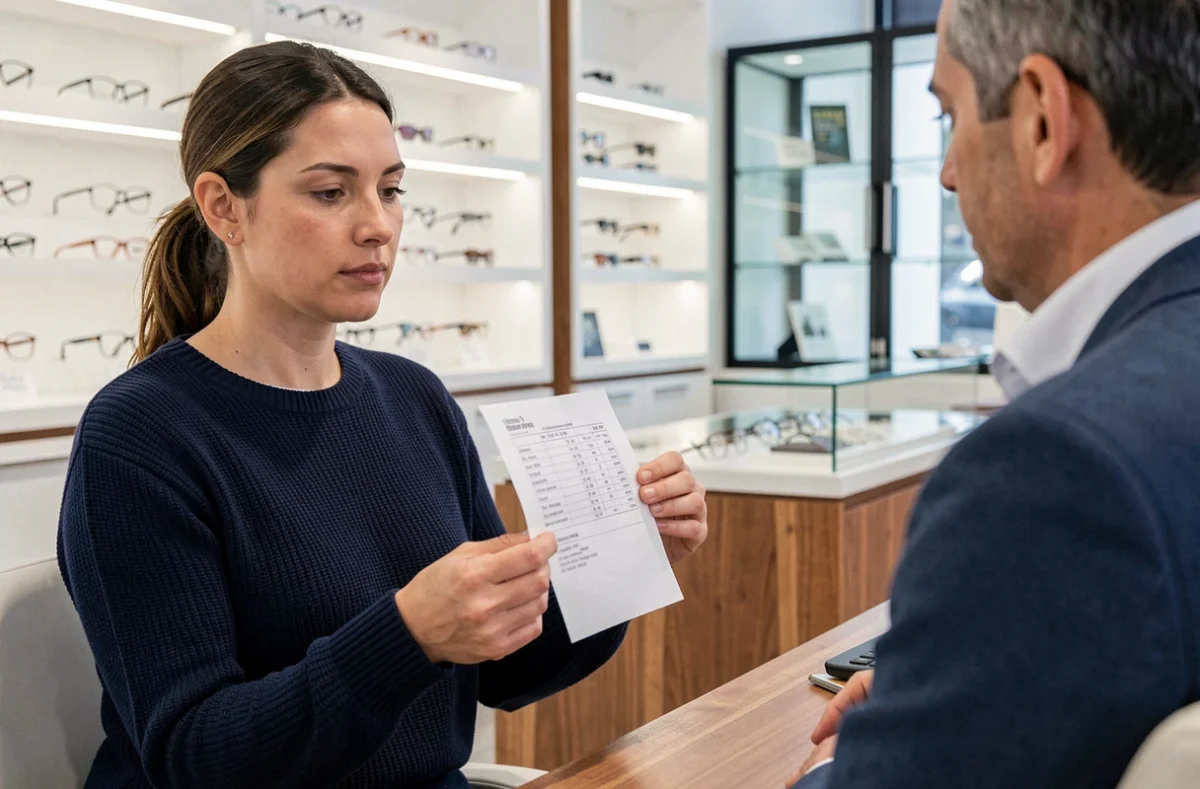
Choosing glasses affects your visual comfort for years to come. Prescription validity, lens type, the number of pairs suited to different activities, and your actual out-of-pocket costs all depend on factors you can consider before even stepping into an optical store.
Prescription validity and renewal periods: differences by age
Before your appointment with the optician, first check that your prescription is still valid. Validity periods vary by age group and do not match the reimbursement schedule for new glasses.
| Age group | Prescription validity | Reimbursed renewal (general case) |
|---|---|---|
| Under 16 | 1 year | Varies depending on changes in vision |
| 16 to 42 | 5 years | Every 2 years |
| 43 and over | 3 years | Every 2 years |
A valid prescription does not guarantee that a renewal will be covered. From age 16 onward, reimbursement is generally available every two years. Changes in your vision may allow an earlier renewal under certain conditions.
Also bring your supplementary health insurance details. Your out-of-pocket costs depend on your policy, and comparing them with the listed price gives you a more accurate picture of the actual cost. Before you go, it may be helpful to prepare for your appointment with the optician by gathering these documents.
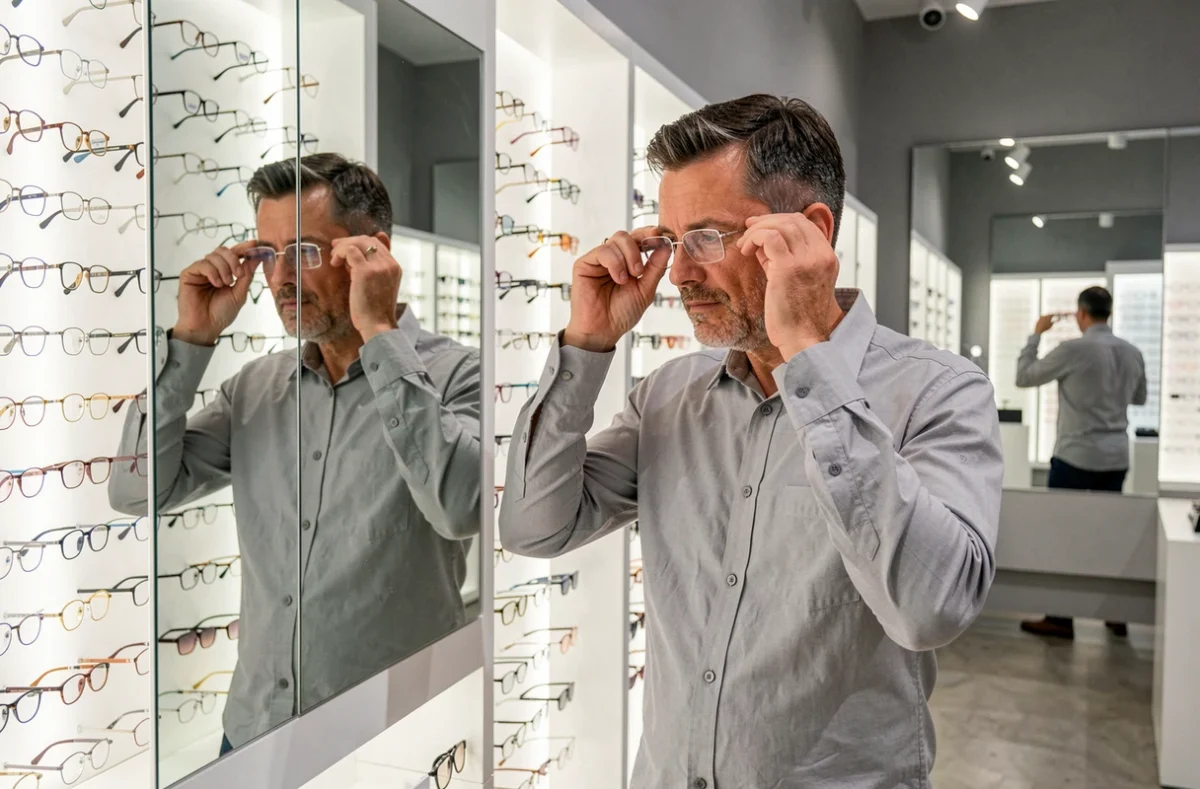
One pair or glasses for different activities: choosing between screen use, driving, and reading
Choosing between one versatile pair and several specialized pairs comes down to practical considerations. The table below compares the two approaches for the most common activities.
| Criteria | One pair (progressive lenses) | Several pairs for different activities |
|---|---|---|
| Near vision (reading) | Dedicated zone in the lens | Single-vision lenses optimized for reading distance |
| Screen use (intermediate distance) | Intermediate zone can sometimes be narrow | Intermediate-distance lenses with a wide field of view |
| Driving (distance vision) | Upper part of the lens | Single-vision or driving-specific progressive lenses |
| Adjustment | Adjustment period of a few days to a few weeks | No adjustment between zones |
| Initial cost | Higher for a single pair | Increases with the number of pairs |
Progressive lenses combine three prescriptions in a single lens. The trade-off is a narrower field of vision in the transition zones. For extended screen use, intermediate-distance lenses offer a wider lateral field of view than standard progressive lenses.
Before your appointment, make a note of the specific situations in which your vision is less clear: eye strain at the end of the day in front of a monitor, glare when driving at night, or difficulty reading small print. This information can help you choose between one all-purpose pair and glasses designed for a specific activity.
When a medical examination is still necessary
An optician adjusts eyewear based on an existing prescription. They do not diagnose medical conditions. A sudden decline in vision, double vision, or flashes of light require an appointment with an ophthalmologist, not just a visit to an optical store. Mistaking discomfort caused by unsuitable glasses for a medical symptom can sometimes delay treatment.
Out-of-pocket costs and the 100% Santé scheme: compare quotes before choosing
The listed price of a pair of glasses does not reflect what you will actually pay. Your out-of-pocket costs depend on the type of lenses, any added treatments, and your supplementary health insurance policy.
The 100% Santé scheme may cover progressive lenses with no out-of-pocket costs if you meet the coverage requirements. The scheme requires frames and lenses to meet specific standards, but it covers a functional range of options.
- Ask for a detailed quote for each option, with separate prices for the frames, lenses, and each treatment (anti-reflective, blue-light filtering, thinning)
- Compare your out-of-pocket costs after reimbursement from the French national health insurance system and your supplementary insurance, not the list price
- Find out which options justify the price difference between the 100% Santé scheme and an option outside the scheme
Some lens coatings add several dozen euros to the price without providing a measurable benefit for every wearer. Blue-light filtering, for example, is mainly relevant to people who spend long periods in front of screens. Asking the optician to explain each additional cost can help you distinguish genuine comfort benefits from unnecessary extras.
Documents and information to gather before your optician appointment
Getting ready is simple: gather a short list of documents and personal notes. Arriving without a valid prescription or your supplementary insurance card can prolong the appointment and prevent the optician from preparing an accurate quote.
- Current prescription (check the date against your age in the table above)
- Supplementary health insurance card or third-party payment certificate, so the optician can calculate your out-of-pocket costs in real time
- Your current glasses, even if they are damaged, so the optician can compare your previous prescription with the new one
- Notes on situations that cause visual discomfort (screen use, night driving, prolonged reading) to help guide the choice of lenses
A well-prepared appointment takes less time and gives you a quote you can use from your very first visit. Without this information, the optician has to make assumptions, increasing the risk of glasses that are not properly calibrated.
Choosing between a lightweight titanium frame, thick acetate, or a flexible material depends as much on your face shape as on the weight of your prescribed lenses. A strong prescription can mean thicker lenses, which require a frame that holds them securely without slipping. Asking about the total weight of the glasses when worn gives you a useful comfort criterion that a quick try-on in the store may not always reveal.