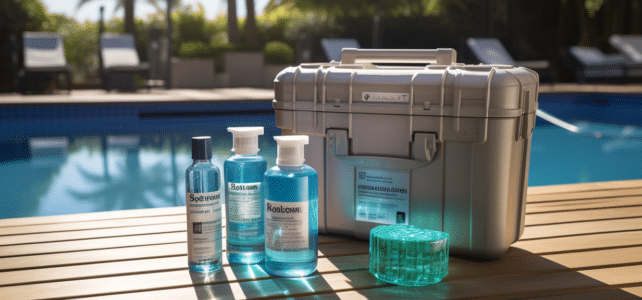
The chemical balance of pool water is a fundamental aspect to ensure a healthy and enjoyable swim. This delicate balance relies on several key parameters, including pH, calcium hardness, total alkalinity, and the presence of disinfectants like chlorine. An improperly adjusted pH can lead to irritation of the eyes and skin, while inappropriate hardness can damage equipment. Understanding how to maintain these levels within optimal ranges is essential to prevent the proliferation of algae and bacteria and to ensure the longevity of the facilities.
The Fundamentals for Balanced Pool Water
The chemical balance of water is a delicate ballet where each parameter plays a crucial role. The pH, which measures whether the water is acidic or basic, should be maintained within a ideal range of 7 to 7.4, to ensure the comfort of swimmers and preserve the equipment. In this regard, neutral pH serves as the benchmark for ideal swimming, where water hygiene and user well-being are in harmony.
The hardness of water (TH), expressed in French degrees (°F), should be monitored closely and should be between 10°F and 25°F. A high TH can indeed lead to harmful limescale deposits on pool surfaces and cloud the clarity of the water. Conversely, water that is too soft could damage surfaces by causing premature corrosion. The use of PPM for pools allows for precise measurement of mineral concentration to prevent any imbalance.
Total alkalinity (TAC), on the other hand, is a fundamental indicator of the water’s ability to stabilize pH. It should fluctuate between 80 and 120 mg/L. A high TAC acts as a buffer, protecting against sudden pH variations that could negatively impact the swimmer’s experience and the durability of the infrastructure. The interaction between these different elements is governed by tools such as the Taylor Balance and the Langelier Index, which help assess the overall balance of the water. Let’s not forget temperature, whose impact on water balance is significant, altering the solubility of chemicals and influencing reactions within the aquatic ecosystem.

Strategies and Practices for Optimal Pool Water Maintenance
To preserve the chemical balance of water, regular analysis is not only recommended but is an essential step. The use of water quality testers, whether in the form of strips or electronic devices, allows for meticulous analysis of critical parameters such as pH, TH, and TAC. These instruments provide an accurate diagnosis that guides the adjustment of maintenance products, thereby reducing the risk of damaging pool surfaces and equipment.
The fight against phosphates, often overlooked elements, must be part of any maintenance strategy. Indeed, they promote the growth of algae, compromising water quality. Measure and regularly control their presence to prevent such issues. At the same time, disinfection of water using chlorine, salt, or bromine is essential to maintain healthy water. This operation must, however, be performed respecting the appropriate dosages, as an excess of disinfectant can disrupt the chemical balance and harm the quality of the swim.
The role of filtration cannot be underestimated in the quest for clear and balanced water. As a primary defense system against impurities, effective filtration guarantees clear water that feels pleasant to the touch. Ensure meticulous maintenance of filters and adhere to the recommended filtration cycles for each type of pool. Combine these measures with careful monitoring of the chemical parameters of the water, for impeccable quality and optimal comfort for swimmers.