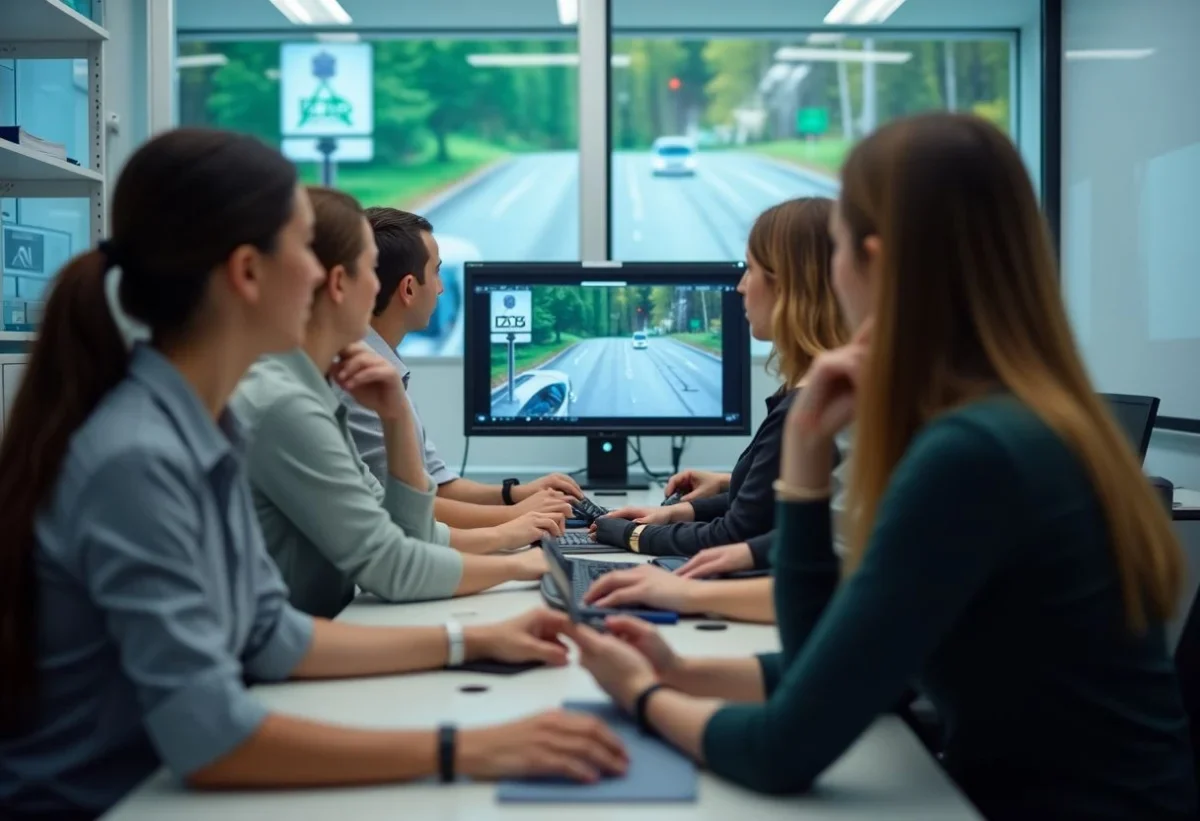
Obtaining or recovering a driver’s license is not always a straightforward process. For some, it involves going through specific assessments, such as psychotechnical tests. These tests play an often-overlooked but essential role in the process, ensuring that every potential driver possesses the necessary skills to drive safely. By exploring the various aspects of these tests, we will discover their importance, content, and the reasons why they are indispensable for certain drivers. Thus, anyone concerned can be better prepared and understand the significance of these assessments in the overall context of road safety.
What is a psychotechnical test?
Psychotechnical tests for driver’s licenses are assessments designed to measure the cognitive and psychomotor abilities of drivers. Their main goal is to ensure that the person being tested has the necessary skills to react appropriately in various driving situations.
- Cognitive assessment: This part of the test checks the ability to analyze, understand, and solve complex problems.
- Reflexes and coordination: Measuring reaction speed and the ability to coordinate between the eyes and hands is crucial for ensuring safe driving.
- Stress management: The tests also evaluate how a person handles pressure, an essential aspect for ensuring safety on the road.
Why take a psychotechnical test?
The requirements for psychotechnical tests vary depending on the situation. Some individuals must take these tests for specific and imperative reasons.
The first case involves drivers who have had their license suspended or revoked for serious offenses. In this context, the tests are mandatory to assess whether the driver can be allowed to get behind the wheel again.
Others may be required to take these tests due to their profession. Professional drivers, for example, must demonstrate impeccable driving skills, and this type of assessment may be required periodically.
Finally, psychotechnical tests may be necessary for elderly individuals to verify whether their abilities are still intact for safe driving.
How to prepare for a psychotechnical test?
Although the psychotechnical test is perceived as an obstacle, it is possible to prepare effectively to increase the chances of success.
- Regular training: Practical exercises are available online to familiarize oneself with the test format.
- Sufficient rest: Make sure to be well-rested to be in the best possible condition.
- Stress management: Learn to control your anxiety with breathing techniques or meditation.
Proper preparation not only allows for passing the test but also reduces stress and boosts self-confidence on the day of the exam.
The consequences of failing a psychotechnical test
Failing a psychotechnical test for a license can have significant repercussions. Composed of several components, this evaluation is decisive for recovering or obtaining certain driving authorizations.
If the candidate fails, they will often have to wait a certain period before they can retake the evaluation. This waiting period is crucial for those who need to improve their skills and prepare for the next exam.
In some cases, a failure may lead to additional obligations, such as specific training to address the weaknesses identified during the test. This training can be beneficial, as it helps to fill in gaps and improve skills.
Finally, being failed can affect self-confidence, but with a positive and proactive approach, it is possible to turn this failure into an opportunity for learning and personal growth.